How To Select Precision Grade For Mini Crossed Roller Bearings (P5 vs P4)
When designing compact rotary systems such as robot joints, optical turntables and inspection fixtures, many mechanical engineers face a common question: which precision grade is suitable for miniature crossed roller bearings, P5 or P4?
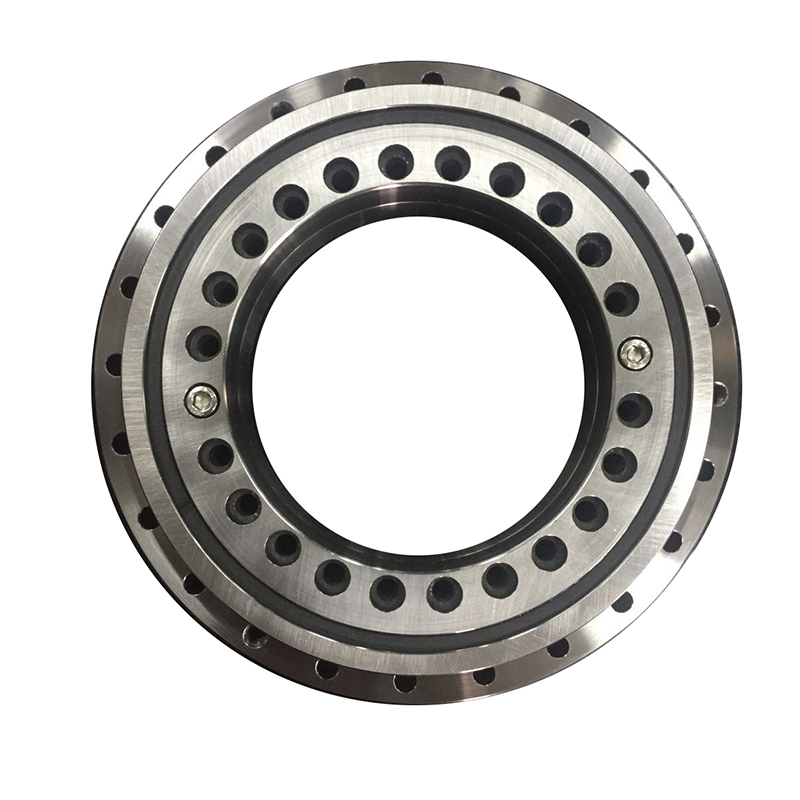
Choosing the correct grade balances positioning accuracy, budget and long-term operational stability, while over-specification may unnecessarily raise project costs. Mini crossed roller bearings rely on 90° alternately arranged cylindrical rollers to support combined axial, radial and overturning loads within a slim cross-section.
Their performance is highly sensitive to dimensional tolerance, raceway roundness and rotational runout. ISO precision grades define these key indicators, and P5 and P4 are the two most widely selected grades for small precision crossed roller bearings. P5 grade serves as the mainstream option for most automation rotary mechanisms. It delivers controlled dimensional tolerances and low rotational runout, satisfying requirements for collaborative robot joints, general inspection turntables and medium-precision indexing devices. P5 miniature crossed roller bearings offer stable rotary accuracy with reasonable cost.
For projects where positioning tolerance is not ultra-tight and minor runout is acceptable, P5 is the most cost-effective solution. P4 grade belongs to the ultra-precision category with much tighter geometric tolerances. Raceway grinding, dimensional inspection and runout testing are carried out under stricter production standards. P4 small crossed roller bearings feature extremely low radial and axial runout.
They are preferred for high-end optical equipment, semiconductor handling units, precision measuring instruments and high-accuracy rotary stages, where tiny angular errors will directly affect final product quality.
A common misunderstanding among designers is that P4 is always better regardless of working conditions. Higher precision brings higher manufacturing requirements and price. If the application does not demand ultra-low runout, P5 can fully meet performance needs and reduce component budget. Meanwhile, installation environment, preload method and mounting flatness also affect the actual achieved accuracy.
Even P4 bearings cannot reach nominal precision if assembled on uneven mounting surfaces. Our miniature crossed roller bearings are available in both P5 and P4 precision grades, with optional open or sealed structures and customizable preload.
Each batch is inspected for dimensional tolerance, raceway quality and rotary runout before delivery. Our technical team supports design-in consultation to help customers match the proper precision grade according to equipment specifications, working environment and budget.
If you need technical guidance for selecting mini crossed roller bearings or request precision test reports, feel free to contact our engineering team for support.