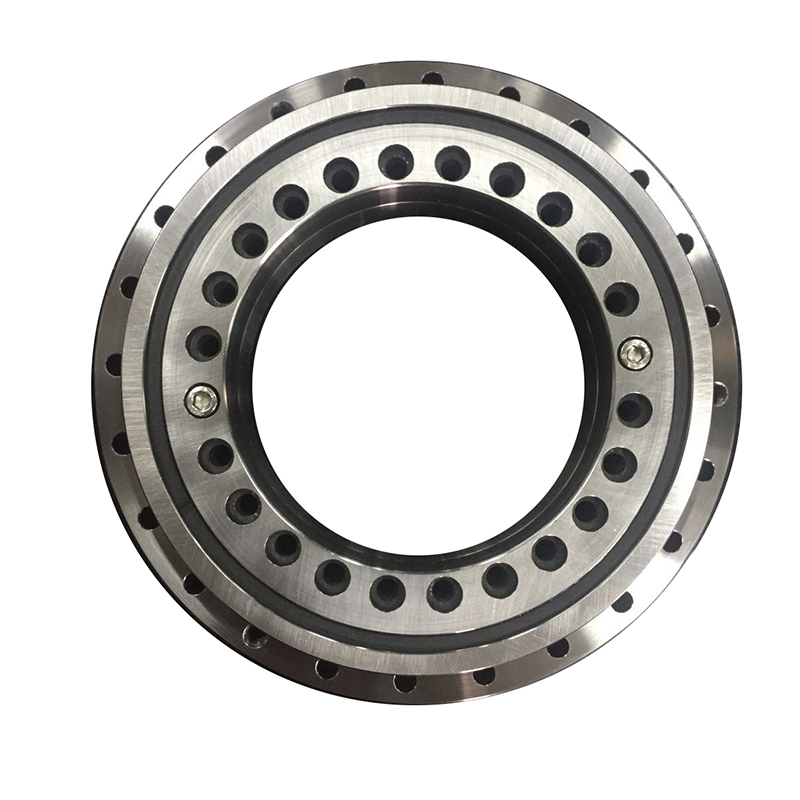
In modern industrial automation, smart manufacturing, precision CNC machine tools, medical equipment, and industrial robotics, crossed roller bearings are rapidly becoming the preferred choice for mechanical engineers when designing high-performance rotary joints.
However, during the actual design and procurement process, engineers often fall into selection traps when faced with a wide array of models (such as RU, RB, RE, RA, and CRBH) and varying preload requirements. This not only prevents equipment from reaching its peak performance but also leads to unnecessary cost overruns.
This comprehensive guide breaks down the core elements of crossed roller bearing selection, helping you quickly identify the most reliable and cost-effective solution for your application.
1. Why Do Precision Applications Demand Crossed Roller Bearings?
Traditional radial or thrust bearings often need to be paired or combined to handle complex, combined loads (simultaneous axial, radial, and tilting moment loads). This significantly increases the required installation space and overall weight of the assembly.
Crossed roller bearings overcome these limitations through an innovative structural design:
- Cylindrical rollers are arranged orthogonally (at 90 degrees to each other) in a V-shaped raceway.
- This cross-array configuration enables a single bearing to withstand loads from all directions simultaneously.
- Because the rollers maintain line contact with the raceway (compared to the point contact of ball bearings), the rigidity is increased by 3 to 4 times, while achieving micron-level rotational accuracy and runout.
2. A 4-Step Guide to Selecting the Right Bearing Model
When selecting a crossed roller bearing for your project, evaluate the following four key dimensions:
Step 1: Rotation Requirements (Inner Ring vs. Outer Ring Rotation)
This is the foundational classification for selection:
- High Inner Ring Rotation Accuracy: Choose the RB Series (separated outer ring, integrated inner ring).
- High Outer Ring Rotation Accuracy: Choose the RE Series (separated inner ring, integrated outer ring).
- High Accuracy for Both Rings (with flexible mounting): Opt for the RU Series or CRBH Series (both inner and outer rings are integrated).
Step 2: Spatial and Weight Constraints
- If your equipment has extremely tight space limitations and requires a lightweight design, the RA Series (ultra-thin type) is the ideal choice. It minimizes section thickness while maintaining excellent rigidity.
Step 3: Load and Preload (Radial Clearance)
- Positive Clearance (Micro-clearance): Suitable for higher speed applications with lighter loads where extreme rigidity is not the primary concern.
- Negative Clearance (Preload): Mandatory for applications requiring maximum rigidity and ultra-high rotational precision, such as CNC rotary tables or robotic joints. Note that excessive preload increases frictional torque, requiring precise calculation.
Step 4: Mounting Hole Requirements
- The RU Series comes with pre-drilled mounting holes, eliminating the need for presser flanges and housing covers. This drastically simplifies the assembly process, reduces mounting errors, and cuts down on labor hours.
3. Avoiding Pitfalls: 3 Common Mistakes in Bearing Application
Based on years of field experience from our application engineering team, these three mistakes are the most common:
- Mistake 1: Blindly Pursuing the Highest Precision Class (e.g., P2)
Higher precision classes exponentially increase manufacturing costs and lead times. For general automation fixtures, P5 or P4 classes offer more than enough performance. P2 precision should be reserved strictly for ultra-precise measuring instruments or semiconductor manufacturing equipment. - Mistake 2: Ignoring the Flatness of Mounting Surfaces
Crossed roller bearings are thin-walled, precision-engineered components. If the flatness of the housing or shaft mounting surface is subpar, locking the bearing will cause micro-deformations. This leads to uneven roller stress, causing overheating, abnormal noise, and premature flaking. - Mistake 3: Mixing or Under-applying Lubrication Grease
These bearings are typically pre-lubricated with high-quality lithium-based grease before leaving the factory. Avoid mixing different brands of grease during subsequent maintenance, and perform regular checks to prevent bearing seizure caused by dry friction.
4. Crossed Roller Bearing Quick Reference Table
For your convenience, we have summarized the characteristics of the most widely used series in the market today:
| Series | Structural Feature | Rotational Performance | Typical Applications |
|---|---|---|---|
| RU Series | Integrated inner/outer rings; with mounting holes | High rotation accuracy for both rings | Industrial robotic joints, speed reducers, medical equipment |
| RB Series | Separated outer ring; integrated inner ring | High inner ring rotation accuracy | CNC indexing heads, heavy-duty precision rotary tables |
| RE Series | Separated inner ring; integrated outer ring | High outer ring rotation accuracy | Crane swivels, radar antenna rotating bases |
| CRBH Series | Integrated inner/outer rings; ultra-high rigidity | Stable rotation with low frictional torque | Precision machine tool spindles, hollow rotary platforms |
| RA Series | Separated outer ring; integrated inner ring; ultra-thin | Lightweight with minimized thickness | Light-weight collaborative robots (Cobots), exoskeletons |
Conclusion & Technical Support
Selecting the right crossed roller bearing is critical to elevating your mechanical design performance and optimizing your product’s cost structure.
As a dedicated manufacturer of precision bearings, we provide a comprehensive range of high-precision crossed roller bearings (available for custom designs and premium drop-in replacements for global brands). Our engineering team is ready to support your project with free 3D CAD model downloads, load calculations, and technical selection consultations.
👉 Need the latest product catalog or a quick quote for your project? Click “Contact Us” or send an email to our technical team today. Our engineers will respond with full support within 2 hours!